
CUSTOMER VISITS
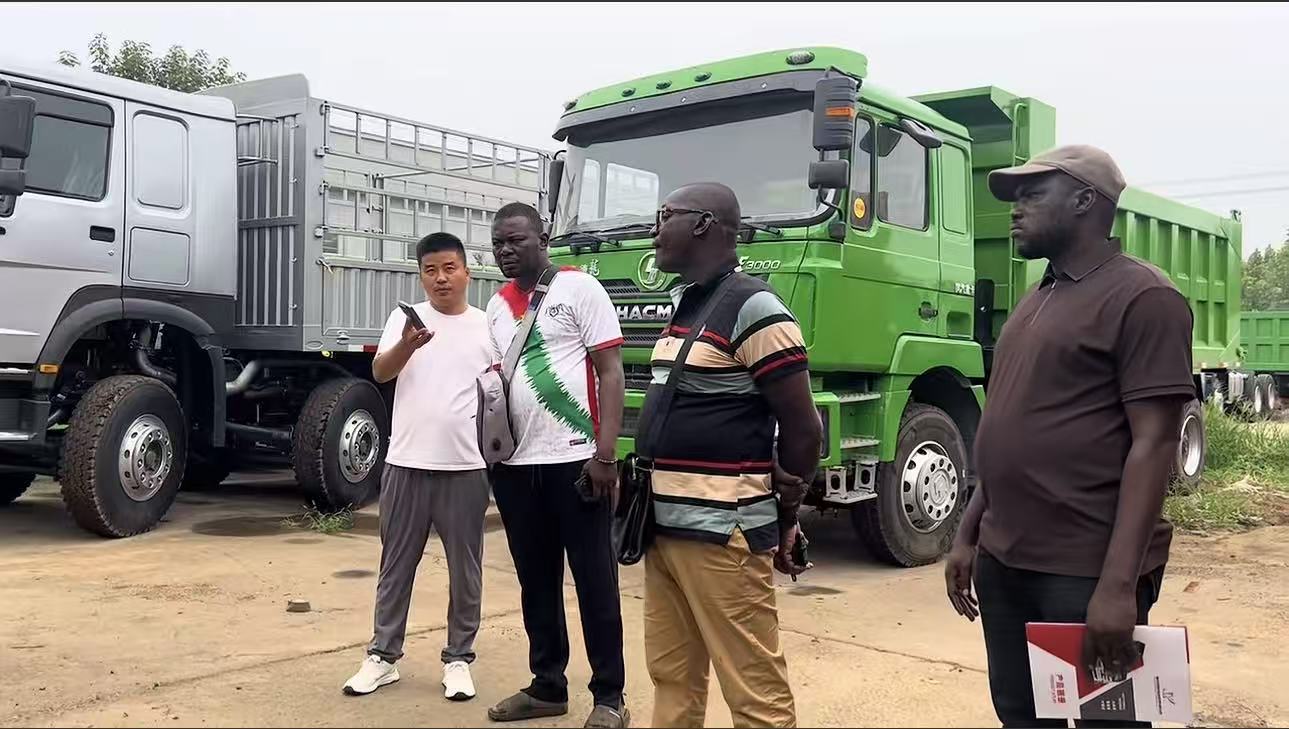
African Customers Compare Dump Trucks in the Yard
BY ADMIN · Sep 11, 2026
The green and white trucks were standing side by side when the visitors arrived. For the customers, that made the yard a useful place to compare real vehicles rather than make a decision from a specification sheet alone.
Starting with the work the truck must do
The September visit focused on dump trucks and equipment for demanding transport applications. Looking at several vehicles together creates an opportunity to connect visible differences with practical questions about loading, road access and the daily working environment.
A dump truck is part of an operating business. Its body must suit the material being carried, while the chassis and drivetrain need to be considered alongside the route and expected load. Engine power is only one part of that discussion; the way the vehicle will be used gives the specification its purpose.
From a walk-around to configuration questions
During the on-site inspection, the discussion covered the trucks’ main specifications, hydraulic equipment and available configuration options. A walk around the vehicle is a useful starting point because it gives both sides something concrete to refer to.
Cab access, the relationship between the body and chassis, tyre selection and tipping equipment all deserve attention. Where a buyer needs a particular engine, transmission or body arrangement, it is better to identify that requirement clearly than assume every vehicle in the same model range is identical.
Thinking beyond the purchase
The conversation also included spare parts and after-sales support. Those topics matter because the truck will eventually be maintained far from the yard where it was inspected. Local workshop experience and the availability of familiar components can influence the purchasing decision.
The value of the visit was the opportunity to bring those concerns into the same discussion. Buyers comparing dump trucks can start in the same way: describe the material, operating conditions and destination, then review a vehicle proposal built around that information.